$47.99
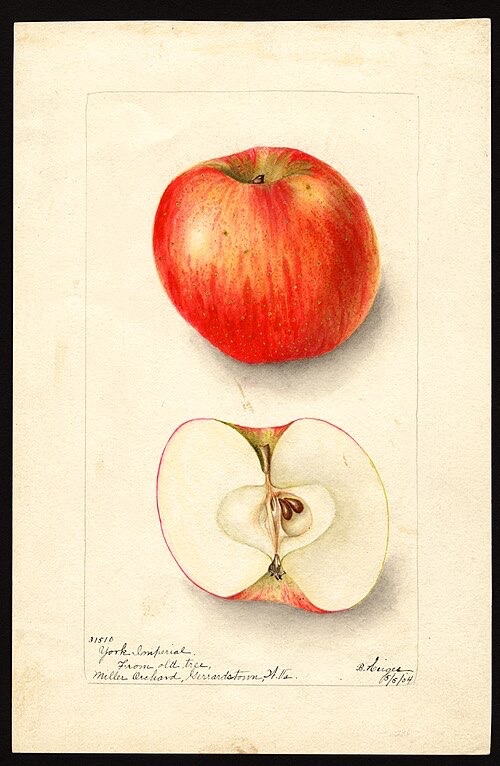
(zones 4-8) premier all-purpose culinary apple, its dense flesh resists turning to mush under heat, making it a standout choice for pies, crisps, baked apples, and thick applesauce.
Available on both Bud 9 and MM111 Rootstock.
York Imperial Apple Tree (Malus domestica 'York Imperial') History & Origin Discovered on a farm near York, Pennsylvania, in the early 1800s, this historic American heirloom was first propagated around 1820 by local nurseryman Jonathan Jessop. Originally sold under the name "Johnson's Fine Winter," it quickly earned a reputation across the Mid-Atlantic and Appalachian orchards for its unmatched winter keeping ability, leading famed 19th-century horticulturist Andrew Jackson Downing to call it the "Imperial of Keepers." Flavor & Appearance Easily recognized by its distinctive, slightly lopsided shape, the York Imperial produces medium-to-large fruit with yellow-green skin heavily flushed and striped in rich red. Its crisp, coarse-grained, off-white flesh delivers a bright, sweet-tart flavor. While brisk and tangy straight off the branch in autumn, the fruit mellows and develops deeper sweetness after several weeks in cold storage. Culinary & Storage Uses Prized as a premier all-purpose culinary apple, its dense flesh resists turning to mush under heat, making it a standout choice for pies, crisps, baked apples, and thick applesauce. Its high juice yield and balanced acidity also make it a traditional favorite for pressing into sweet cider, hard cider, and apple vinegar. Harvested late in the season (typically October), properly chilled fruit stores reliably for five to six months. Growing Specifications • USDA Hardiness Zones: 4–8 (tolerates Zone 9 in cooler winter microclimates) • Chill Hours: Approximately 800–1,000 hours (below 45°F) • Bloom Time: Late spring (Pollination Group D / Late-season bloomer) • Pollination Partners: Self-sterile diploid; requires a different compatible mid-to-late or late-blooming apple variety planted within 100 feet. Top pollination partners include Northern Spy, GoldRush, Rome Beauty, Arkansas Black, Yellow Newtown Pippin, and late-blooming crabapples. (Note: Avoid relying on triploid varieties like Bramley's Seedling or Roxbury Russet as sole pollinators, as their pollen is sterile.) Trees are bench grafted 1/4-3/16 inch diameter and 1 1/2 to 2 feet tall when shipped.
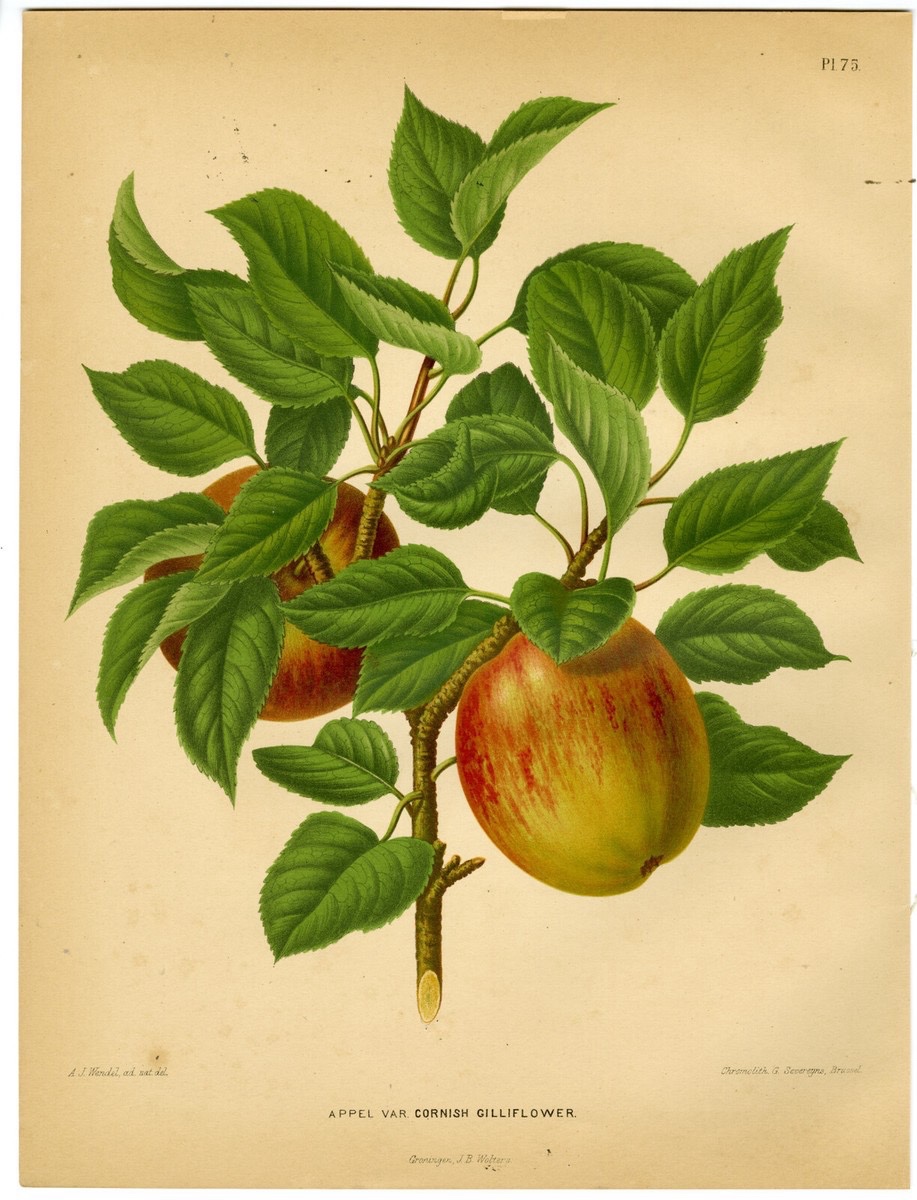
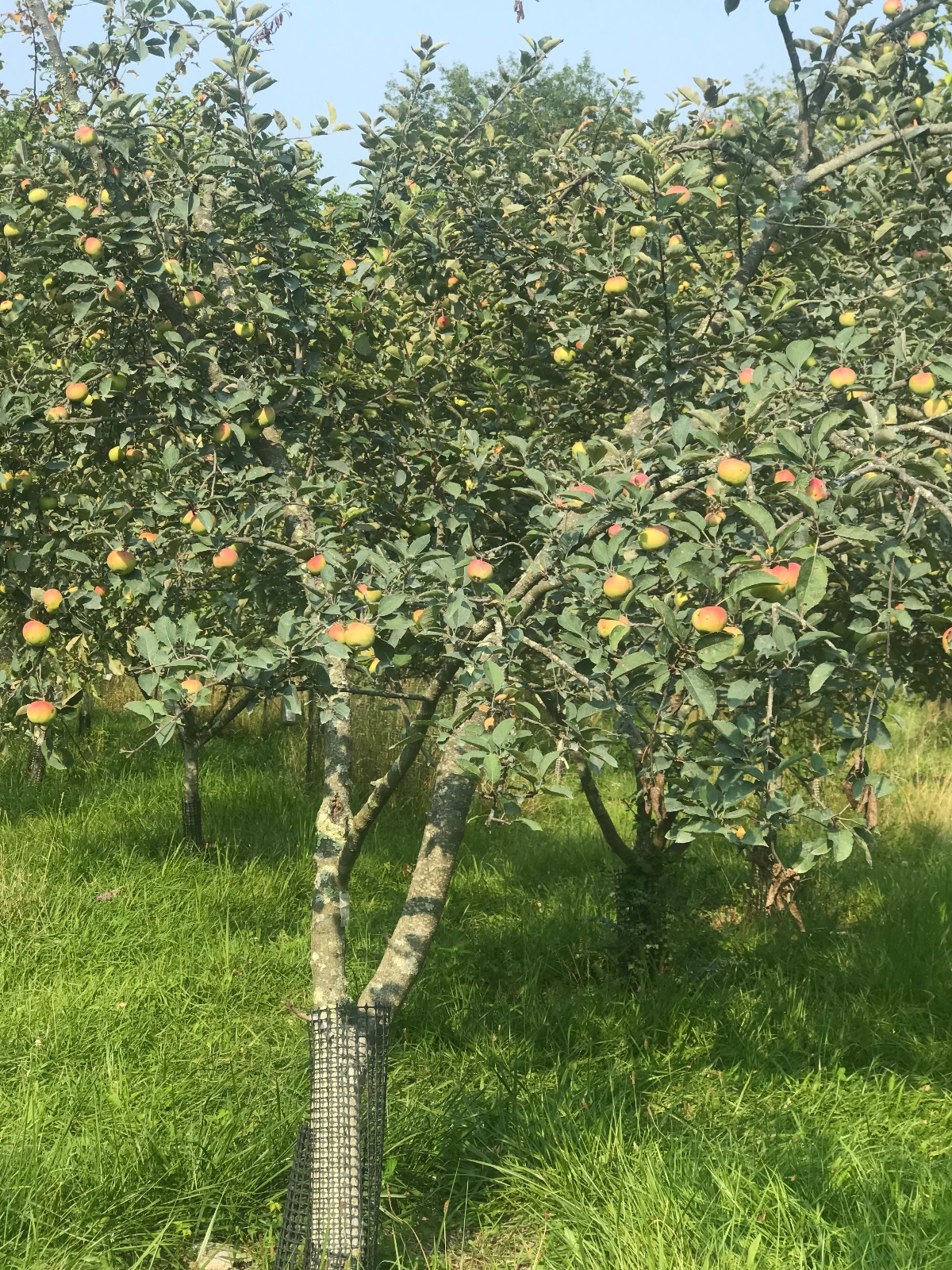
(Zones 3-8) An excellent tasting apple for fresh eating in norther climates