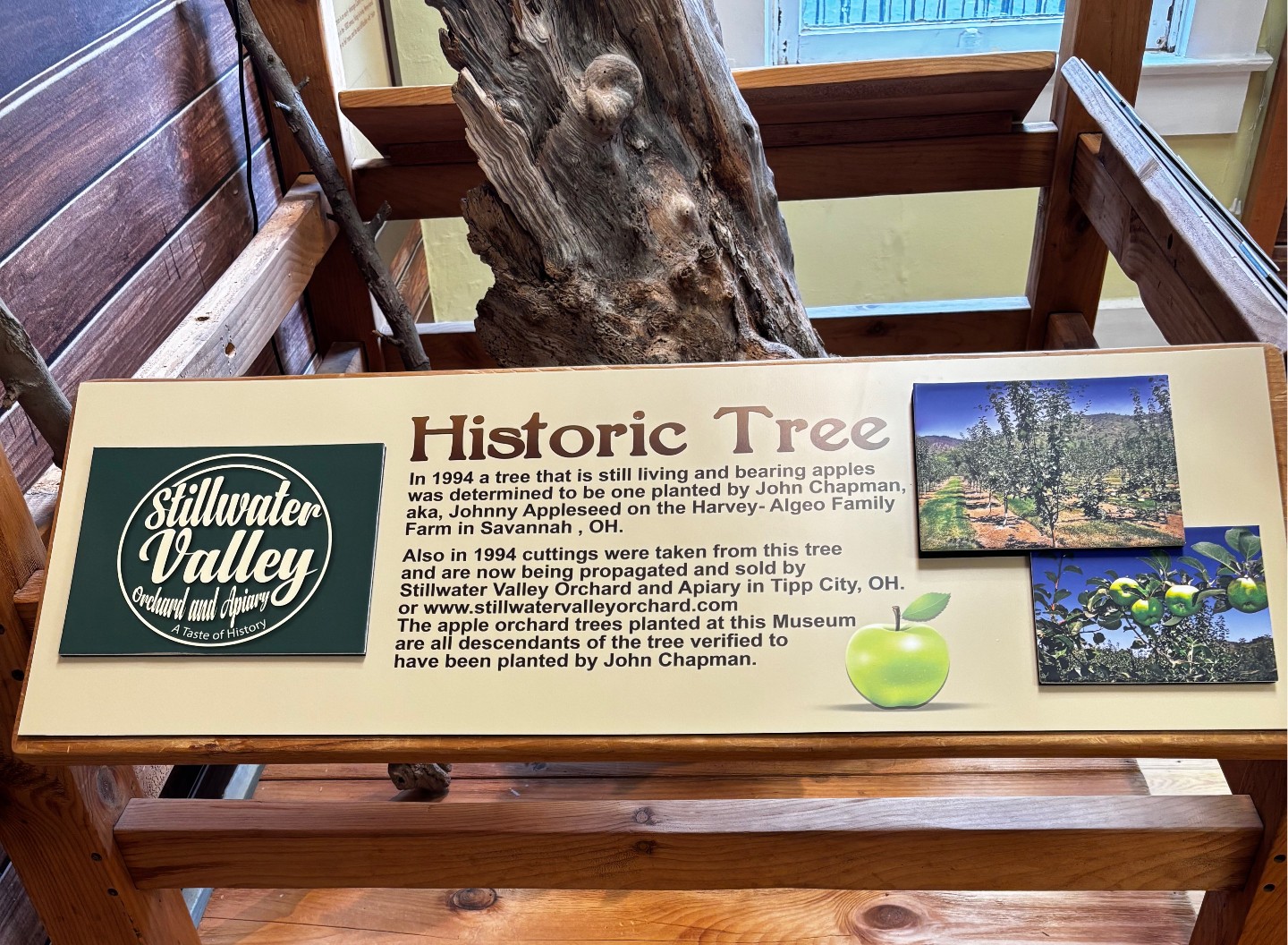
Historic Johnny Appleseed tree trunk and museum display

Authentic Johnny Appleseed Trees

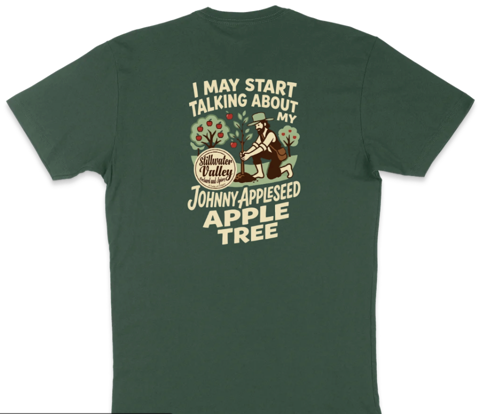
Johnny Appleseed T-shirt
JOHNNY APPLESEED

Johnny Appleseed T-shirt

A great conversation starter!

$50
SIZE
1

A piece of American history in your backyard — get saplings from the lineage of an American legend from Stillwater Valley Orchard and Apiary.

We have partnered with The Johnny Appleseed Educational Center and Museum in Urbana, Ohio to grow and propagate saplings from the last remaining tree planted by John Chapman, better known by the name Johnny Appleseed, which was found on a farm in Savannah, Ohio. We will offer scions and grafted apple trees for the public from 1994 cuttings of this tree, which we have propagated on our orchard. 20% of proceeds from tree sales will go to help fund the Johnny Appleseed Museum.

Through words and deeds, John Chapman embodied and taught the virtues of generosity, humility, stewardship, thrift, entrepreneurship, and caring for one’s fellow man.

Heritage Offerings

From the Algeo Lineage

Johnny Appleseed Apple Tree

$100

Trees are cleft grafted with scions descended from the Algeo tree (last known surviving tree planted by Johnny Appleseed) in Savannah, Ohio. Available on both Bud 9 and MM111 Rootstock — choose the option that best suits your climate and space below.

The tree produces firm, green apples with an occasional pink blush. They average 2.5-3.5 inches in diameter and have a very sweet taste with medium acidity. They are also an excellent choice for cooking and cider-making.

Bud 9 (USDA Zones 3-8) grows up to 8 feet — great for small spaces and cold northern climates, producing large fruit relatively quickly. Because Bud 9 has a shallow root system, stake the tree while it is fruiting to prevent leaning or uprooting. MM111 (USDA Zones 4-7) grows up to 20 feet, adapts to many soil types, and reliably produces fruit in any climate that receives 800 chill hours during winter. The tree is self fertile and does not need a pollinator. Both variants require 800 chill hours during winter.

Independently authenticated by the Johnny Appleseed museum at Urbana University and the Ohio Historical Society.
CHOOSE ROOTSTOCK
INQUIRE

A New Discovery

Chapman's Lost Pear

Chapman's Lost Pear

$100

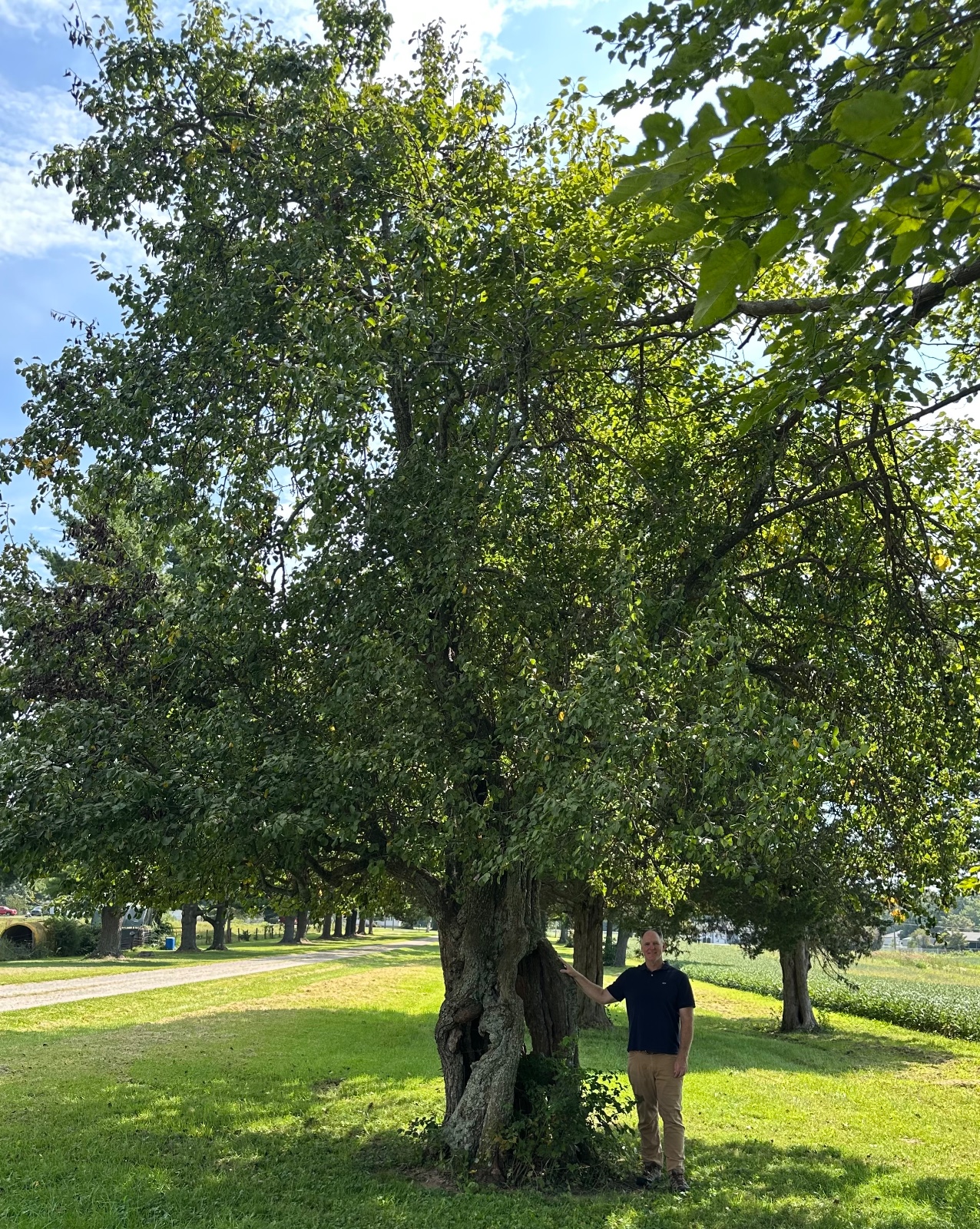
In 1826, John Chapman also known as Johnny Appleseed, is recorded in the historical record being in the area attending to his nursery business around the Little Miami River near Lebanon, Ohio. I was approached by a woman who grew up on a farm near Lebanon, Ohio owned by her grandmother. Her grandmother, in order to keep the farm going and bills paid after her husband passed away, turned the farm house into a nursing home to care for the areas elderly. This woman who approached me said that there was a elderly resident there named Ben Watkins, born 1850, who repeatedly told her family when she was a young girl that John Chapman planted the very large and old pear tree that sits on this farm, which corroborates with the earlier record of Chapman's presence in the area. Ben Watkins then told her that John Chapman actually planted 3 pear trees on her grandmother's farm as well as planting 3 pear trees each on 2 nearby farms. All of these other trees are no longer on these farms, but this one pear tree remains. A representative of the Ohio State Champion Tree registry has estimated the age of the tree as being between 150 and 230 years old, again matching with the known timeline of Johnny Appleseed. We are actively working to verify the exact age of the tree in cooperation with the Johnny Appleseed Museum. Once the age is verified we can say for certain it is a Chapman Pear tree. We will keep you posted. For those who need no further evidence you can reserve a tree for spring shipment. 20% of sales proceeds are donated to the Johnny Appleseed Museum.

Grows up to 15 feet

USDA zones 5-10

Pears are very sweet, fibrous, and have a slight nutty flavor.

INQUIRE