$47.99
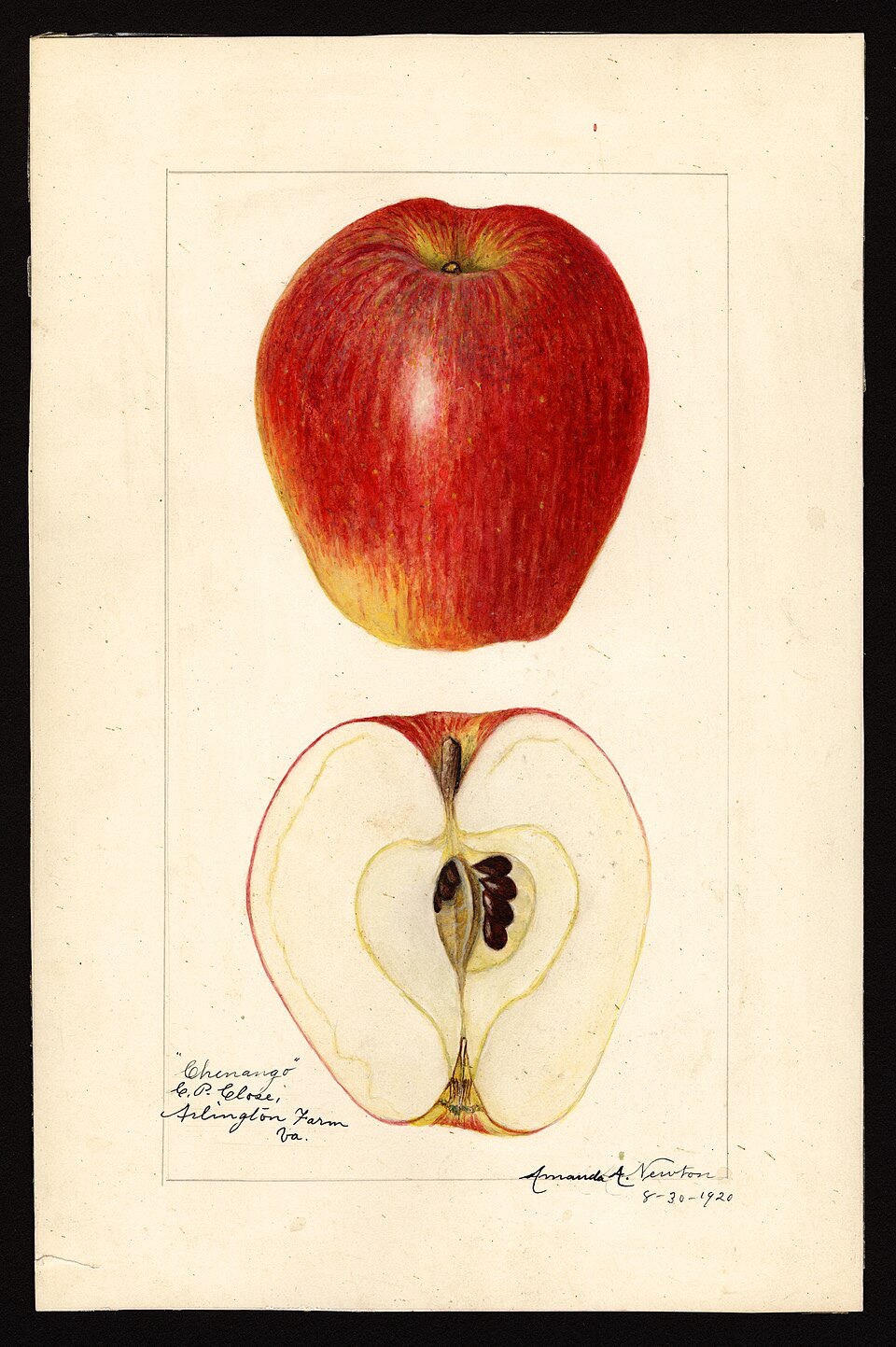
(zones 4-9) Low chill hours,distinctively strawberry-like aroma when fully ripe. The white, tender flesh is exceptionally juicy, sweet, and mildly subacid with spicy or tropical undertones.
Available on both Bud 9 and MM111 Rootstock.
Originated in the early 1800s in Lebanon, Madison/Chenango County, New York (with some accounts tracing it to Connecticut). It was originally known as the "Frank Apple," named after the African American man who planted the original seedling. It became widely popularized and renamed by the 1850s to reflect its striking appearance. Primarily celebrated as an exceptional late-summer dessert (fresh eating) apple. Because its flesh cooks down beautifully, it is also highly rated for making smooth sauces and piesHighly versatile, thriving across Zones 4 through 9. It is one of the few northern antiques that succeeds in warmer climates due to a relatively low chilling requirement of about 400 chill hours. Noted for its powerful, distinctively strawberry-like aroma when fully ripe. The white, tender flesh is exceptionally juicy, sweet, and mildly subacid with spicy or tropical undertones. Classified as a Mid-Season / Bloom Group 4 (Group D) flowering apple. It is a diploid variety with fertile pollen, but it is self-sterile and requires a cross-pollination partner that blooms at the same time. Consider Gala, Honecrisp or Northern Spy as pollination partners. Trees are bench grafted 1/4-3/16 inch diameter and 1 1/2 to 2 feet tall when shipped.
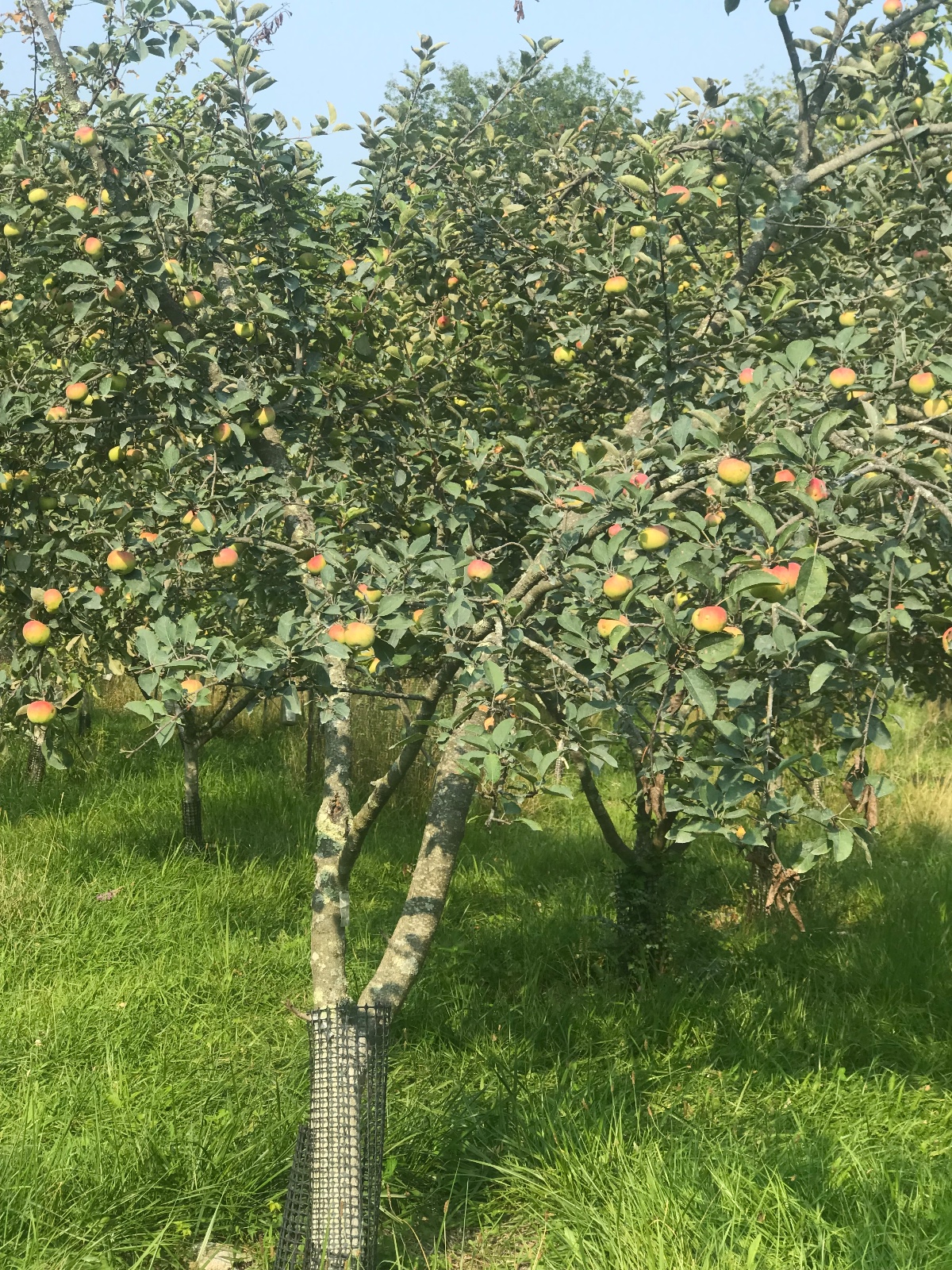
(Zones 3-8) An excellent tasting apple for fresh eating in norther climates
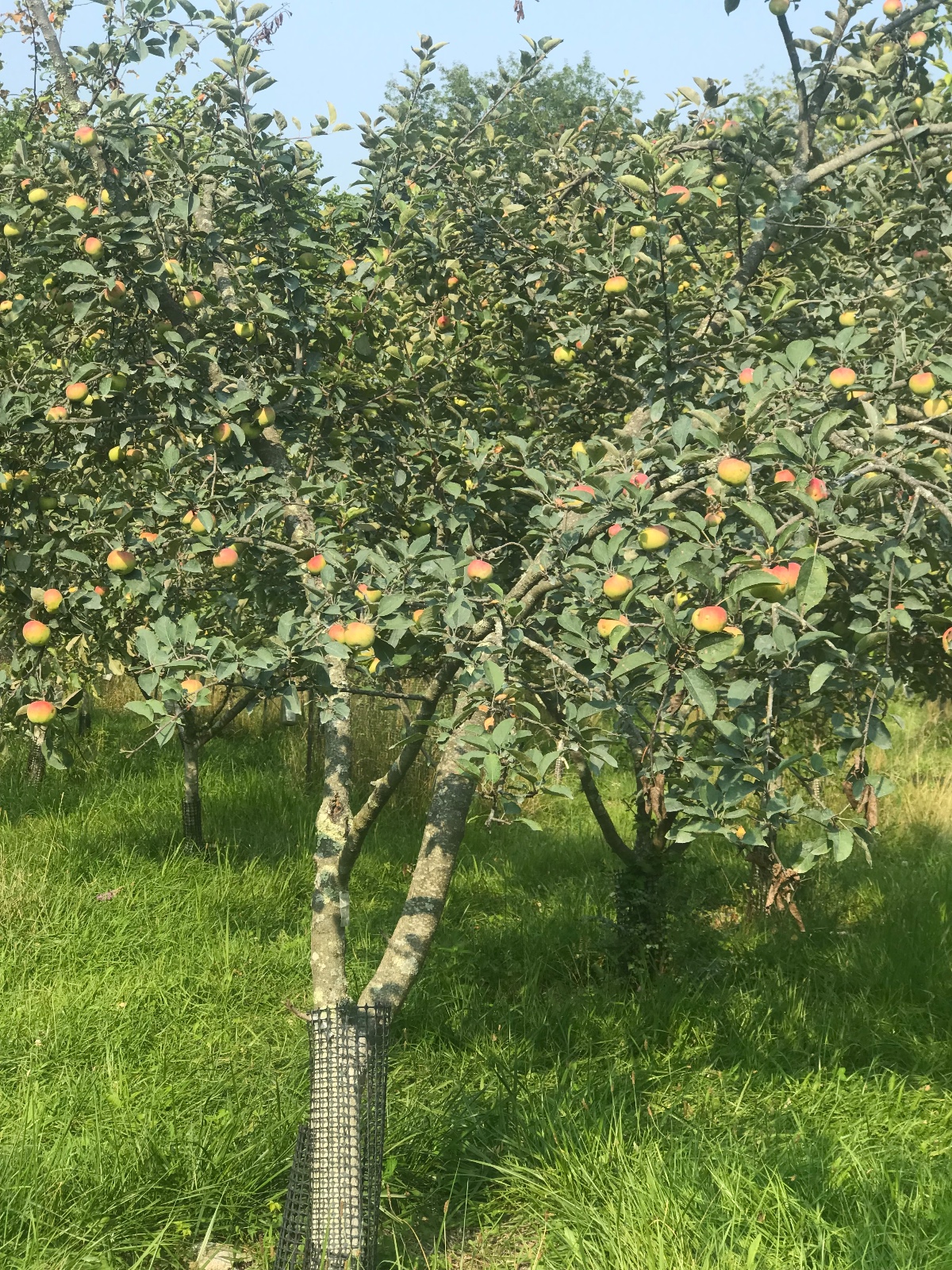
(zones 4-8) Firm, crisp, white flesh with a sweet-tart balance with a subtle pear flavor with hints of honey and vanilla.